
Why Good Shooting Technique Matters
Scoring chances are rare in youth soccer, so every shot counts. Learning how to shoot a soccer ball the right way helps players finish more of those chances, whether they train in Newport Beach or play league games across the area.
Power alone rarely wins the moment. Clean contact, balance and smart placement make the difference, and those details are part of what players work on in the training programs at BR Elite Soccer.

DISCOVER BR ELITE SOCCER
CLICK HEREThe Mechanics of a Powerful, Accurate Shot
A good shot is a chain of small movements working together. When one link breaks, the ball sails over the bar or rolls weakly to the goalkeeper, so it pays to understand each part.
Plant Your Standing Foot Correctly
The standing foot controls balance and direction. Place it beside the ball, roughly a hand's width away, with the toes pointing toward the target. Planting too far behind the ball usually sends the shot high.
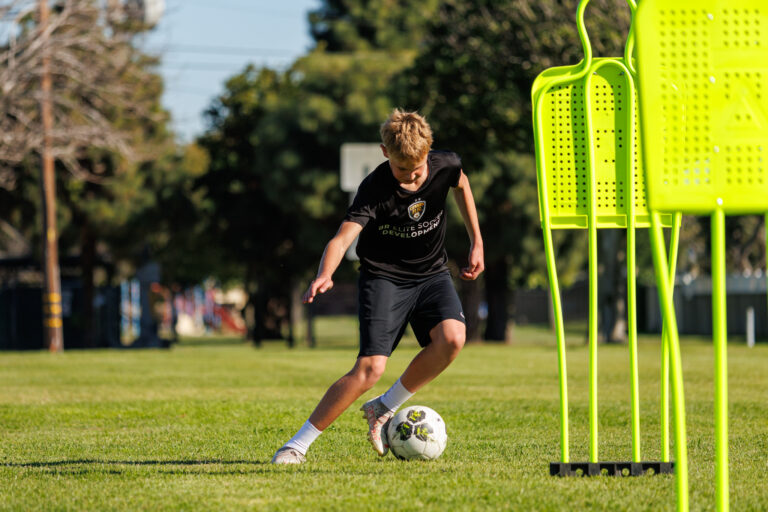
Players who shoot while running need to adjust this step at full speed. That skill builds on dribbling speed and control, because the last touch before the shot has to set the ball where the plant foot can land comfortably.
Strike With the Laces
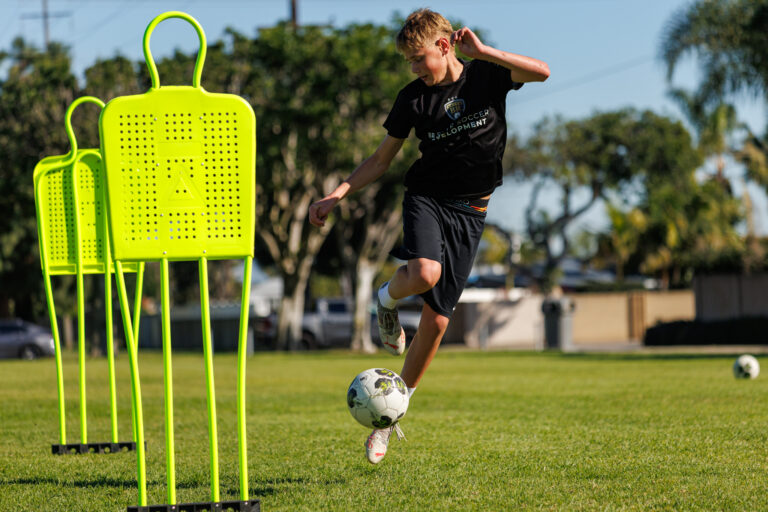
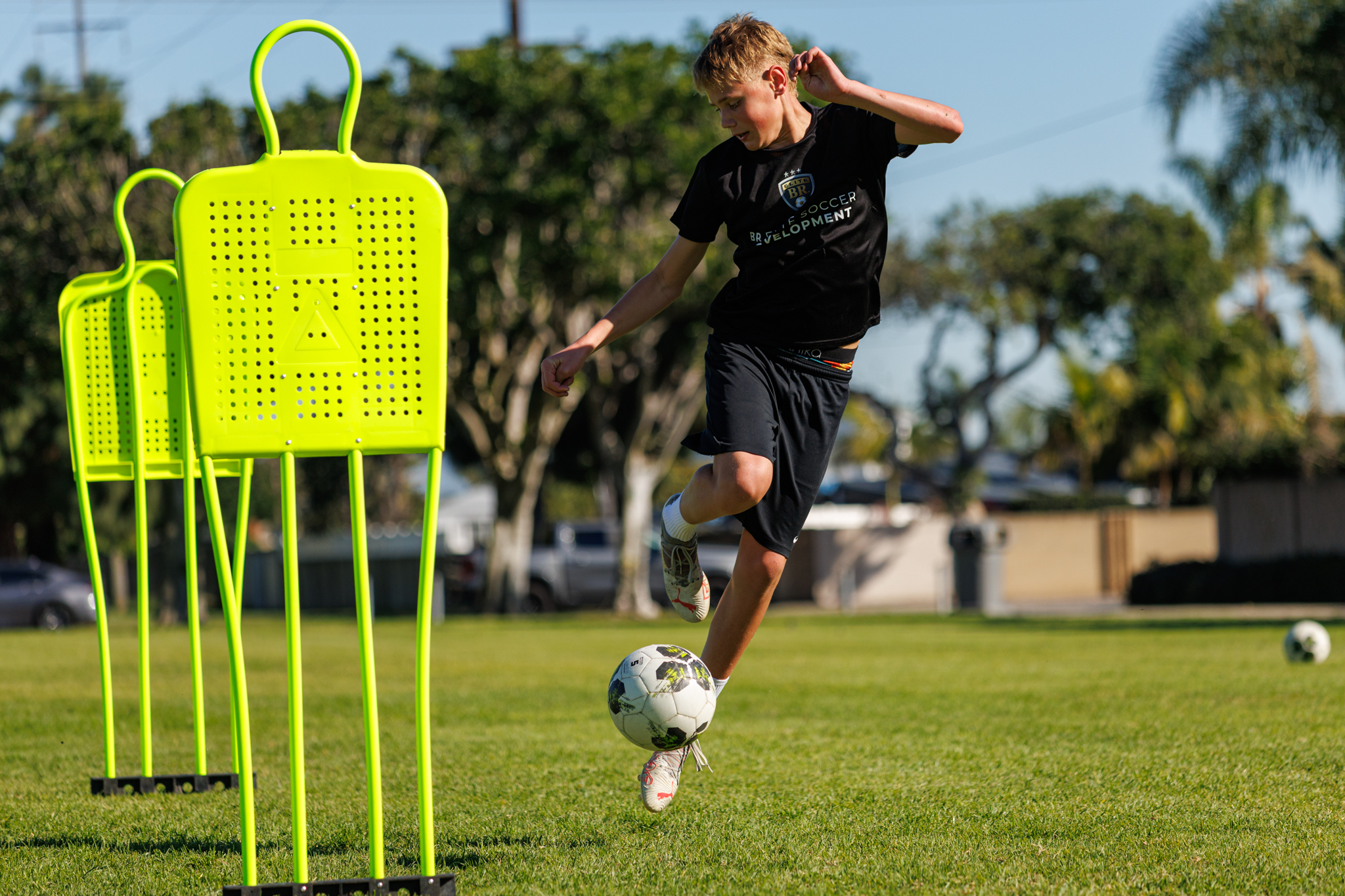
For power, contact the center of the ball with the laces, keeping the ankle locked and the toes pointed down. A loose ankle wastes energy and makes the ball spin unpredictably.
Many young players use the toe because it feels natural. It can work in tight spaces, but the laces give a larger, firmer surface and much more control over the flight of the ball.
Keep Your Body Over the Ball
Leaning back is one of the most common reasons shots fly over the crossbar. Keeping the chest and knee over the ball at contact helps keep the shot low and on target.
Footwear also affects balance during the strike. Proper training gear, especially cleats that fit well and match the playing surface, helps the plant foot grip the ground instead of slipping on contact.
Follow Through Toward the Target
The kicking leg should keep moving toward the target after contact, and many players land on the shooting foot. A short, stopped follow-through usually means less power and less accuracy.
Watching the ball through contact is just as important. Lifting the head too early to look at the goal often causes a mishit, so the eyes should stay on the ball until it leaves the foot.
How to Shoot a Soccer Ball in Different Game Situations
Matches rarely offer a perfect, stationary ball. Players need a few different finishing tools to handle the variety of chances that show up during a game.
Placement Over Power
Near the goal, a well-placed side-foot finish into the corner is often more effective than a hard shot straight at the keeper. The inside of the foot offers the most accuracy for these finishes.
Choosing placement requires a calm mind under pressure. Work on building confidence on the ball helps young players stay composed and pick a corner instead of rushing the shot.
Shooting on the Move
Most shots happen while a player is running. Setting the ball slightly ahead with the last touch lets the player strike in stride without stopping and giving defenders time to block.
Practicing at walking pace first, then jogging and finally at game speed, helps the technique hold together as the tempo rises. Rushing that progression usually leads to poor contact.
Volleys and Half-Volleys
Balls arriving in the air call for different timing. On a volley, players should keep the body over the ball and strike through its center to avoid sending it into the stands.
These finishes depend on timing that only comes with repetition against real crosses and pressure. Structured high-performance training combines that repetition with game-like speed, which helps players react instead of hesitating.
Drills and Habits to Build Better Finishing
Part of learning how to shoot a soccer ball well is practicing in a way that carries over to matches. These habits help players turn technique into goals.
Target Practice With Cones or Corners
Set cones or hang targets in the corners of a goal and aim for them from different distances. Hitting a specific spot trains accuracy far better than simply aiming at the net.
Keep score to make the drill competitive. Tracking how many shots hit the target each week gives players a clear way to see their own progress.
Train Both Feet
A player who can only shoot with one foot becomes easy to defend. Defenders simply block that side and force the ball to the weaker foot, where the chance often disappears.
Spend part of every shooting session on the weaker foot, starting with short, controlled strikes. Accuracy should come first, and power can be added once the contact feels clean.
Quality Reps Over Quantity
Fifty rushed shots teach less than twenty focused ones. Each attempt should have a clear target and a quick self-check on plant foot, contact and follow-through.
Rest between sets also matters, since tired legs lead to sloppy technique. Short, sharp sessions keep the quality high and help young players avoid overloading their kicking leg.
Practical Advice for Players and Parents
For families wondering how to shoot a soccer ball better at home, a wall, a ball and a few cones are enough to start. Two or three short sessions a week focused on technique usually work better than one long session aimed only at power.
Small details are easier to fix with an expert eye. The coaching staff at BR Elite Soccer brings playing experience from Brazil and U.S. college soccer, and private sessions are tailored to each player's needs and goals.

Putting It All Together
A strong shot comes from a stable plant foot, firm contact with the laces, a body kept over the ball and a full follow-through. Add smart placement and work on both feet, and finishing becomes far more reliable.
Consistency matters more than intensity. Making shooting practice part of regular after-school activities for kids builds the steady repetition that good finishing requires.
DISCOVER BR ELITE SOCCER
CLICK HERETurning Practice Into Goals
Understanding how to shoot a soccer ball with power and accuracy gives young players the confidence to take their chances when they appear. With patient, focused practice, good technique becomes second nature.
Families in Newport Beach, Huntington Beach, Irvine and Costa Mesa can explore private, group and team training with BR Elite Soccer and help their player keep growing on and off the field.