
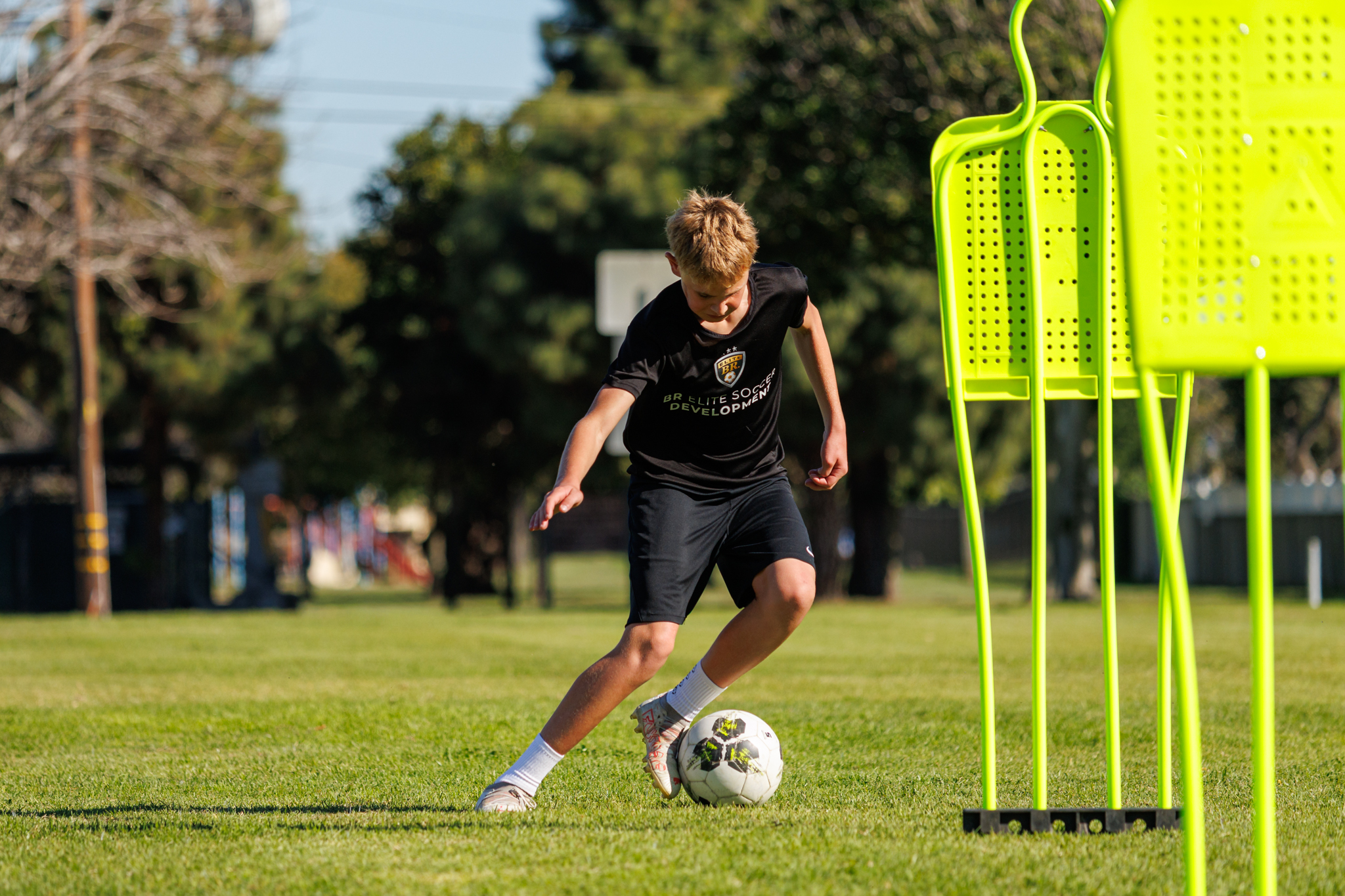
Why the First Touch Decides So Many Plays
Every possession starts with a single contact on the ball. Learning how to improve first touch in soccer helps young players keep possession, buy time and make better decisions, whether they train in Newport Beach or compete in local weekend leagues.
A clean first touch is not a gift reserved for a few naturally talented kids. It is a skill built through repetition, sound technique and good coaching, the kind of detail the training programs at BR Elite Soccer focus on.

DISCOVER BR ELITE SOCCER
CLICK HEREThe Technical Foundations of a Good First Touch
Before any drill, players need a clear picture of what a good touch looks like. These four foundations shape every reception, from a short pass along the ground to a high ball dropping out of the air.
Choose the Right Surface of the Foot
The inside of the foot offers the largest, flattest area and the most control on ground passes. The outside of the foot helps players receive while moving away from pressure, and the sole works well for stopping the ball in tight spaces.
Players should practice with all three surfaces until switching between them feels automatic. This variety connects directly to dribbling speed and precision, because the touch that receives the ball is often the first touch of a dribble.
Cushion the Ball Instead of Stopping It
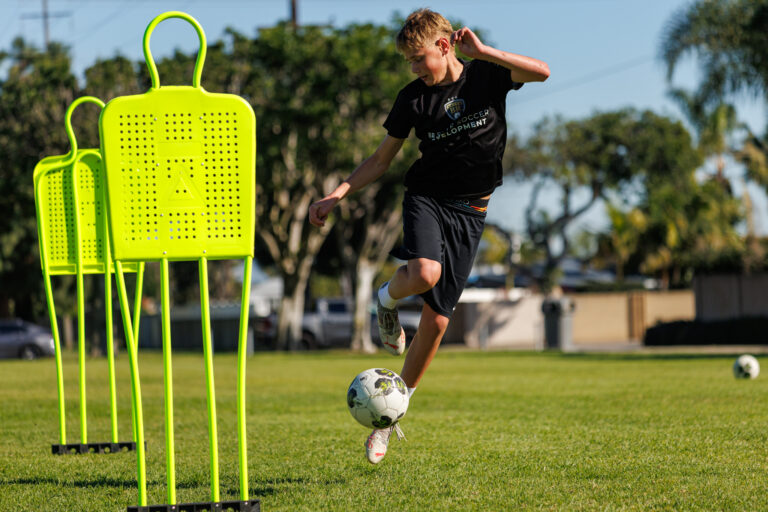
A stiff foot makes the ball bounce away. Relaxing the ankle and pulling the receiving foot back slightly on contact absorbs the pace of the pass, much like a catcher's mitt gives a little when the ball arrives.
Young players often stab at the ball because they feel nervous. A simple cue such as "soft foot, then go" reminds them to receive calmly and move straight into their next action.
Set Your Body Shape Before the Pass
An open body shape, with the hips turned slightly toward the field, lets a player see more options and receive on the back foot. Standing square to the passer usually limits the next move to a backward pass.
Good body shape also lowers anxiety, because players feel less trapped when a defender closes in. Work on overcoming the fear of dribbling often starts with this detail, since a confident reception makes the next action easier.
Touch the Ball Into Space
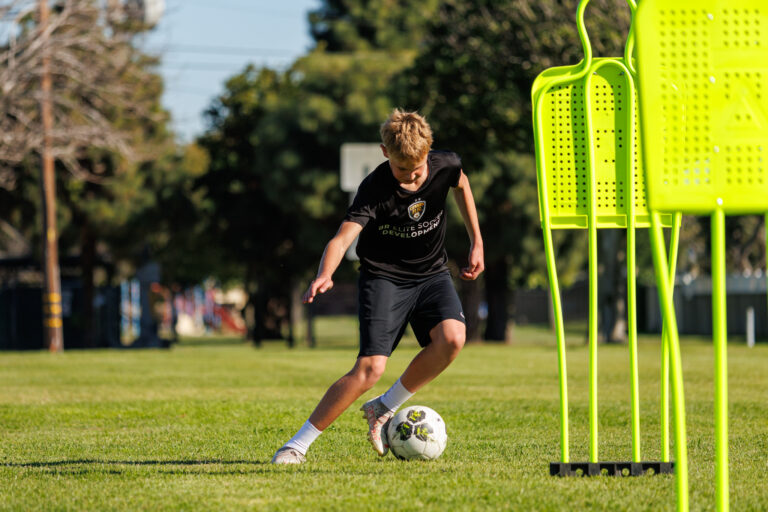
The best first touch rarely leaves the ball dead at the feet. It moves the ball one or two steps into open space, away from the nearest defender and toward the area where the player wants to go next.
A useful habit is deciding the direction of the touch before the ball arrives. That small plan turns a reception into an attacking move instead of a pause that lets the defense recover.
How to Improve First Touch in Soccer With Simple Drills
Technique only sticks when it is repeated with purpose. The drills below work for beginners and experienced players alike, and most of them need little more than a ball, a wall and a few cones.
Wall Passing With Both Feet
A solid wall is one of the best training partners a player can have. Pass the ball against it, receive with one foot, set it with a second touch and repeat while alternating feet every few reps.
Start close to the wall and step back as control improves. Having the right training gear, such as a properly inflated ball and comfortable footwear for the surface, makes these home sessions more consistent.
Juggling for Soft Contact
Juggling builds the soft contact and coordination that carry over to receiving aerial balls. Players can start with one bounce between touches, then progress to alternating feet, thighs and head as their control grows.
The goal is not a record number of juggles. Short, focused sets where the ball stays close and low are more useful than chasing a high score with wild, uncontrolled contacts.
Receiving Under Pressure
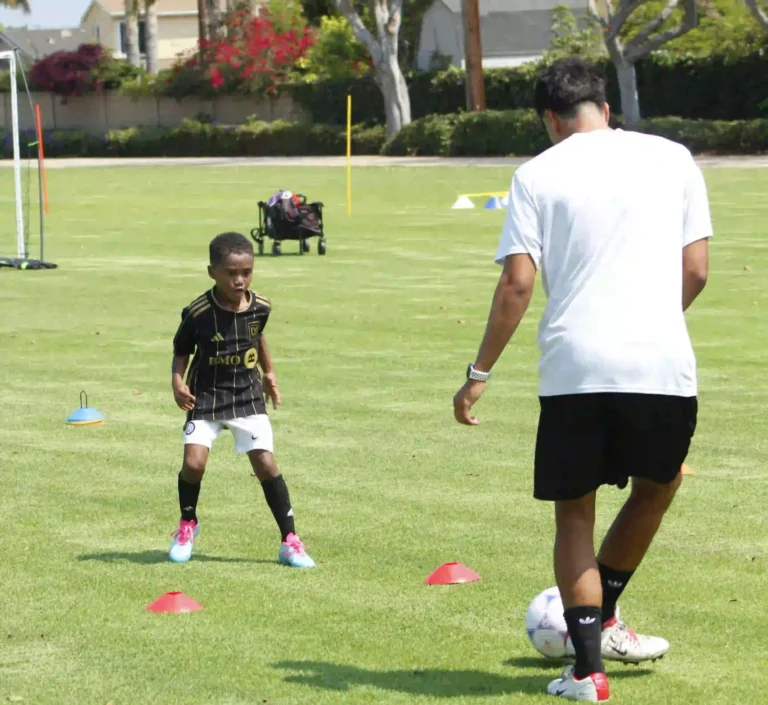
Drills without opposition are only the first step. Once players feel comfortable, a partner or coach should add light pressure from behind or the side, forcing them to scan, shield the ball and touch away from the defender.
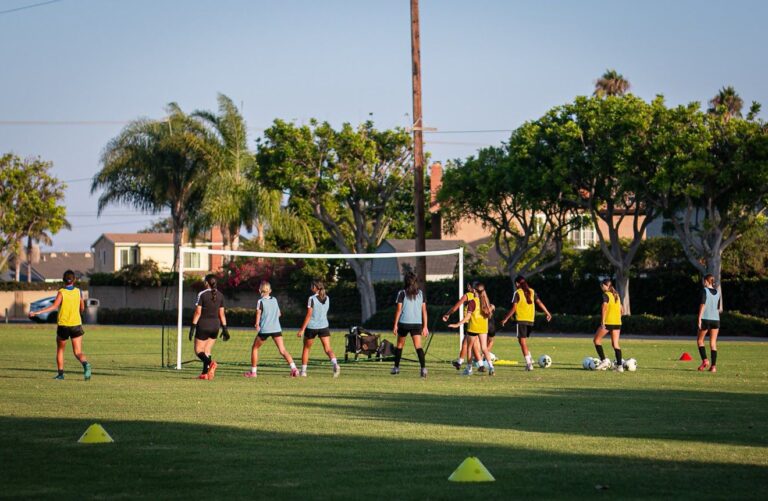
This is where high-performance youth training makes a difference, because pressure, speed and decision-making happen in the same exercise. Small-sided games with limited touches recreate the tempo players face on match day.
Habits That Make Your First Touch Reliable in Games
Many players control the ball well in practice and then lose it in matches. Part of learning how to improve first touch in soccer is building the habits that happen before the ball even arrives.
Scan Before You Receive
Scanning means taking quick looks over the shoulder to check where teammates, opponents and open space are. Players who scan know where their first touch should go before the pass is even played.
Parents can encourage this habit by asking simple questions after games, such as where the open space was. Over time, looking around becomes an automatic part of every reception.
Move to Meet the Ball
Waiting for the ball gives defenders time to step in and intercept. Taking a few steps toward the pass shortens the distance the ball travels and helps the receiver get there first.
Timing matters as much as effort. Moving too early can pull a player out of position, so the best runs start just as the passer looks up and prepares to play the ball.
Train the Weaker Foot With Patience
Defenders quickly notice when a player always receives on the same foot. Building comfort on the weaker side opens new angles and makes a player much harder to read.
Progress on the weaker foot usually feels slow at first. Short, regular sessions with simple passes and receptions tend to work better than long sessions that end in frustration.
Guidance for Players and Parents
For families wondering how to improve first touch in soccer at home, the answer is short, frequent practice with honest feedback. Ten to fifteen focused minutes several times a week usually works better than one long, tiring session for younger players.
Feedback is easier to apply when it comes from experienced eyes. The coaching staff at BR Elite Soccer brings playing experience from Brazil and U.S. college soccer, and private sessions are tailored to each player's needs and goals.

Putting It All Together
A reliable first touch combines technique, repetition and awareness. Choose the right surface, cushion the ball, open your body, scan early and direct every touch into space with a clear plan.
Above all, keep the process enjoyable. Players improve faster when they look forward to practice, which is a big part of why kids love training soccer in a challenging and supportive environment.

DISCOVER BR ELITE SOCCER
CLICK HEREBuilding a Better First Touch, One Session at a Time
Knowing how to improve first touch in soccer gives young athletes more time, more confidence and more options every time the ball comes their way. Consistent practice turns these small details into instinctive habits on the field.
Families in Newport Beach, Huntington Beach, Irvine and Costa Mesa can explore private, group and team training with BR Elite Soccer and find the right setting for their player to keep growing.